Sector: Technology
Immersion isn’t an experience, it’s a story that travels
Immersive experiences only become powerful marketing when they’re designed to create stories that people naturally carry beyond the moment.
By Stephanie Babin, 26/08/26
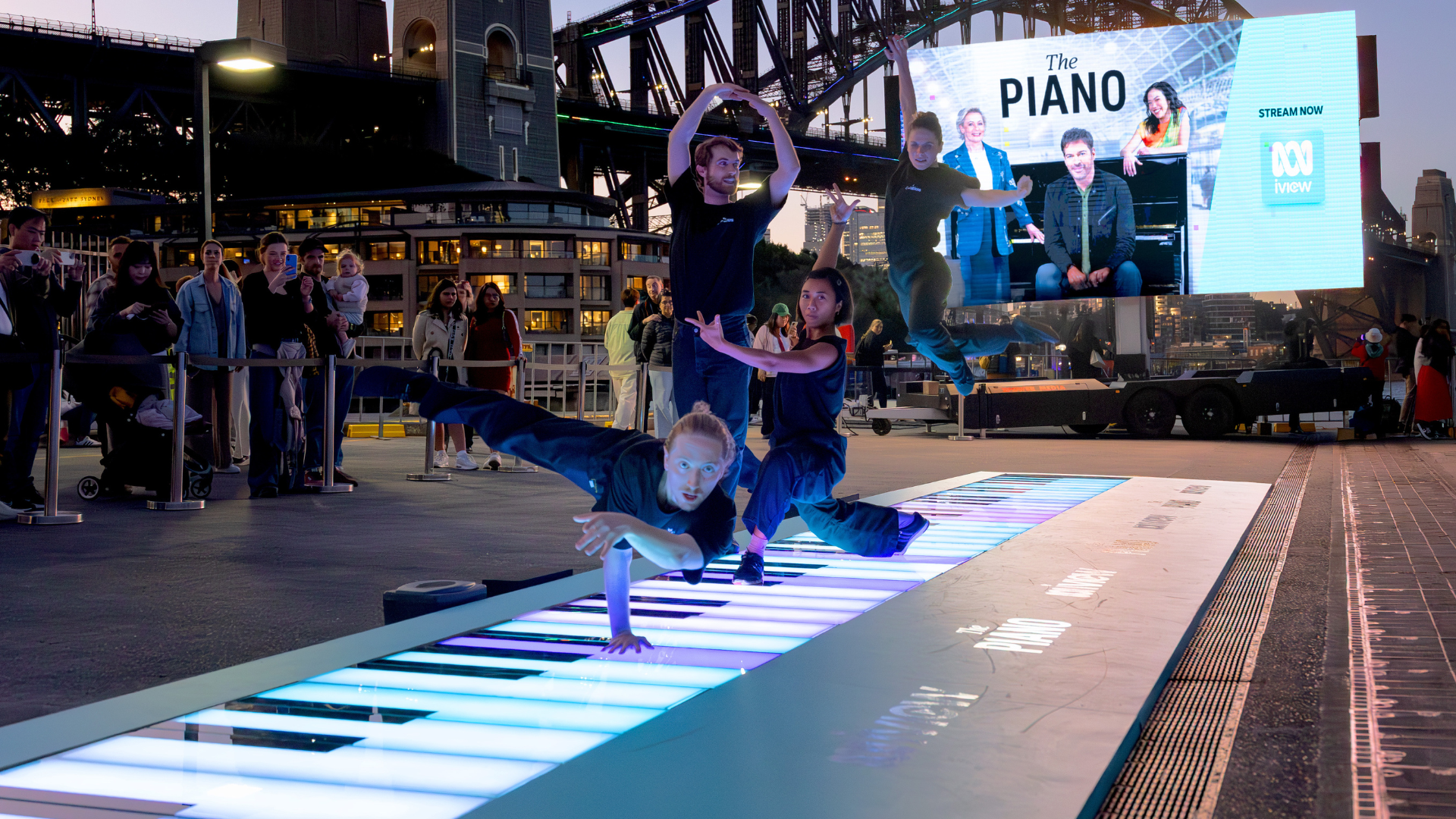

Marketers love the word ‘immersive’. It signals ambition, scale and innovation and suggests a move beyond the flatness of traditional media into something richer, more memorable. But somewhere along the way, immersive brand storytelling got confused with the tools used to create it.
Those working in the brand experience world have become fluent in the language of technology when it comes to activation creation. But there’s increasingly a disconnect from the thing that actually makes an experience land and that is, how it feels.
Immersion is not a format, it’s a feeling, something that is not only enjoyed in the moment, but lives on with these storytellers going on to share their excitement with friends, family and broader audiences. And that distinction matters more than ever in an environment where return on investment and constrained budgets are now non-negotiable. This is why immersive experiences have to become more than events, they must also become distribution engines.
The true audience of an activation is not the 100 people who walk through the door, but the thousands, sometimes hundreds of thousands, who experience it secondhand across social platforms, group chats and dinner conversations. These are the secondary audiences and they are where scale is built.
But secondary reach is not automatic, it has to be designed and the new measure of immersion is retell-ability. A great experience is not just attended, it is narrated. It can be distilled into a single sentence that travels. That is what ignites social spread, not just something that looks impressive, but something that is easy, compelling and irresistible to explain.
When people retell an experience, they are not just sharing content, but translating a feeling into a story, and stories move further, faster and with more credibility than any paid placement.
This is why immersive, strategically designed experiences can outperform traditional media. Instead of paying to reach every audience directly, you create something that audiences choose to carry for you.
And as the FIFA World Cup entered its final thrilling week, there was no better example than Tequila Don Julio 1942’s ‘Port of Champions’ activation in New York. Rather than a branded tent in a fan zone, Don Julio docked a 200-plus-foot megayacht along the Hudson River and turned it into a fully immersive waterfront takeover at Chelsea Piers, creating a luxury hospitality destination, driving range for a week of parties, tastings, dining experiences and World Cup-themed celebrations.
The real strategy isn’t the yacht itself, but the sentence the yacht generated. “There’s a superyacht full of tequila docked in Manhattan for the World Cup” is a story that travels on its own, before anyone has even set foot on the gangway. Every element, the docking, the piers, the partner lineup, was built to be described, not just attended. It gave people something to photograph, but more importantly, something to say. And because it unfolded across the tournament’s biggest week, in the city hosting the final, the story had a moment worth attaching itself to.
Content should never be an afterthought in immersive design, it should be built in from the beginning. What are the moments people will capture? What are the angles? What are the interactions that prompt participation? What is the one-line story they will tell afterwards?
When those questions are answered early, the experience becomes inherently shareable. Not because it asks to be shared, but because it gives people something worth sharing.
And this is where budget constraints become less of a limitation and more of a strategic lens. If you only have the budget for one activation, then it cannot just be good in the room, it has to be exceptional in the retelling. It has to carry beyond geography and scale through people.
Technology still plays a role in enabling this, but it is most effective when it serves the sensory, human layer of the experience, the things that create memory. The things that make someone say, ‘you had to be there’, even as they try to explain it. Because in reality, most people won’t be there.
And that is exactly the point. The goal of immersive storytelling is not to maximise attendance, it is to maximise impact. Build it once, design it to be felt and make sure it travels.
This article originally appeared on adnews.com.au.



See all our insights
See all our insights
See all our insights
Contact us
Curious? Us too. Get in touch.
Let’s craft your next unforgettable event. Reach out to discover how we can help you make a meaningful impact.
Let's chatFrom Madonna to Pinterest. What a tale of two Coachellas means for brand experiences
The real battle in experiential marketing is no longer reach versus scale – it’s presence versus performance.
By Meredith Cranmer, 21/05/26

Meredith Cranmer, founder and managing director of Curious Nation
This year’s Coachella served as a global stage for something of a cultural paradox, offering critical insights for marketers and those seeking to create powerful brand experiences. We witnessed two vastly different approaches to ‘being there’.
On the one hand, the hollow spectacle of the queen of pop performing to a forest of smartphones held aloft by a seemingly uninterested crowd; on the other, a tech giant that forced its audience to look away from the screen entirely.
Weekend two of the annual music and arts festival held in the Coachella Valley in the Colorado Desert saw a surprise appearance from Madonna performing two of her biggest hits, Vogue and Like a Virgin, alongside Sabrina Carpenter.
What should have been a moment of pure, unadulterated joy as the Material Girl made her return to the Coachella stage 20 years on was anything but. The real story wasn’t Madonna’s surprise entrance, her duet with the 26-year-old Espresso star, the choreography, or even her overall performance. It was the crowd.
Social media lit up, slamming the crowd’s lacklustre reactions. Thousands of fans, the majority with phones raised, bodies still, little dancing or singing, just filming, drew commentators to label them as ‘dystopian’, ‘zombies’ and ‘stunned mullets’. And it is hard to disagree.
As Vicky Beercock, a leader in brand partnerships, noted, festivals sold premium tickets on the promise of being there. But being there increasingly means performing presence for an algorithm rather than actually having it. When the audience is the content crew, the room loses the energy that made the moment worth capturing in the first place. She adds, “And that’s an economic problem, not just a vibe one. If premium ticket prices are justified by irreplaceable, felt experience – and that experience is being quietly hollowed out by the same content machine festivals depend on – the value proposition starts to crack.”
The Pinterest pivot
Contrast the Vogue vacuum with Pinterest’s activation at the same festival. It’s the third year at Coachella, this year saw Pinterest asking festivalgoers to do the unthinkable and lock their phones in pouches before entering
their space.
Inside, people were making custom charms, writing postcards to mail home, and getting makeup touch-ups. They were actually doing things. This wasn’t just a gimmick but is rooted in specific consumer data. Gen Z searches on Pinterest for ‘analogue aesthetic’ rose 260 per cent between early 2025 and 2026, while searches for ‘dumb phones’ jumped 150 per cent.
While comparing a festival crowd’s reaction to a musical performance and a curated brand experience is not necessarily comparing apples with apples, the broader implications remain. By removing the pressure to perform for an algorithm, Pinterest created something increasingly rare: genuine presence.
They aligned their brand promise of being the ‘anti-scroll’ platform with a physical reality. It served as brand storytelling without requiring a single Instagram post from attendees to convey the message.
The cost of the ‘shared’ moment
If we design an activation purely for shareability, it often makes for a poor experience for the person actually standing there. When the energy in the room dies, the content suffers anyway.
This has big implications for Australian marketers. Brand activations are among the few remaining ways to build deep connections with consumers, and studies show that the experience economy can deliver a return on investment of up to 4 dollars for every 1 dollar spent. This high ROI exists because these moments build deep emotional memory and drive long-term brand advocacy that a fifteen-second video clip simply cannot replicate.
However, that ROI depends entirely on the quality of the interaction. If the consumer is too busy checking their framing to actually feel the product or the moment, the connection remains superficial. You might get the reach, but you lose the resonance.
Of course, I would never suggest we abandon the secondary audience when it comes to developing experiential experiences. We are an industry built on reach and scale, and social engagement, when done right, will remain an important element for brand activations. But we need to find a better balance and cannot afford to treat the live audience as a mere backdrop for the digital one.
The competitive edge in experiential marketing is not a better ring light, but having the conditions to create genuine human responses. We should start by designing the room first. If the vibe is electric, the content will follow organically and feel far more authentic to those watching at home.
The phone is not the enemy, but if we continue to optimise for the screen at the expense of the soul, we are just making very expensive and very quiet commercials.
This article originally appeared on mediaweek.com.
Next InsightSee all our insights
See all our insights
See all our insights
Contact us
Curious? Us too. Get in touch.
Let’s craft your next unforgettable event. Reach out to discover how we can help you make a meaningful impact.
Let's chatKarl’s a curious beast & marketers must follow his lead
Karl might be a curious beast, but he’s also a blueprint for better marketing.
By Curious Nation, 26/03/26

Karl Stefanovic might not be the first person marketers look to for professional inspiration – despite his recent announcement as a speaker at this year’s Cairns Crocodiles.
But in an industry that frequently talks about curiosity while rarely practising it, his willingness to step into uncomfortable conversations highlights something many organisations are quietly losing. In this op-ed, Curious Nation co-founder and managing director Meredith Cranmer argues that true curiosity – the kind that invites challenge, debate and different perspectives – is disappearing from modern workplaces.
In this op-ed, Curious Nation co-founder and managing director Meredith Cranmer argues that true curiosity – the kind that invites challenge, debate and different perspectives – is disappearing from modern workplaces.
Love him or hate him, Karl Stefanovic has never been short on opinions. But while promoting his new interview series, The Karl Stefanovic Show, it was something else that caught my attention. Curiosity.
Some of the interviews featured on The Karl Stefanovic Show feature voices and viewpoints that many people, not just those working in the marketing and creative industries, would not instinctively gravitate towards. It would be easy to switch off, scroll past, or dismiss them entirely, but that response says more about us than it does about the content.
Real curiosity asks something harder. It asks us to stay in the conversation long enough to understand perspectives that sit outside our comfort zones. Because the moment we only engage with ideas that mirror our own worldview, curiosity disappears and echo chambers take hold. And for marketers, that is a dangerous place to operate in.
If our job as marketers is to influence culture and behaviour, we need to understand the people we’re trying to reach. Not just the audiences who look like us, think like us or move in the same cultural circles as us. You cannot influence people you refuse to understand.
Over the past year, almost every conference, panel or strategy session I’ve been to seems to land on the same word. ‘Curiosity’ is framed as the unlock for better strategy, the fuel for creativity and the trait marketers and creatives need most.
And the research backs this up. Studies from Harvard Business School show curiosity improves decision making, strengthens collaboration and leads to more creative solutions inside organisations. Other research links curiosity directly to stronger innovation performance, particularly in industries where solving new problems, such as marketing, is essential.
In other words curiosity is not just a personality trait, it is a real commercial advantage, but talking about curiosity is easy, being curious is something much harder. It’s not something that can be switched on at 9am on a Monday morning.
Added to that, modern working environments are not built for it. Most organisations reward certainty, speed and efficiency. Strategies need answers quickly and campaigns need immediate results. Teams are required to move rapidly from brief to execution.
But curiosity works differently, requiring us to slow down long enough to ask better questions and explore ideas that may not have an immediate outcome. Following the threads that do not yet have a clear return on investment.
Many companies say they encourage curiosity, but employees often experience the exact opposite, with deadlines, hierarchies and risk aversion quietly pushing people back towards safe, familiar thinking.
Curiosity rarely disappears because people lose interest, more often it disappears because the environment squeezes the life out of it.
There’s another challenge that receives less attention. Experience. The longer we spend in an industry, the easier it becomes to believe we already know how things work. Experience gives us pattern recognition and efficiency, but it also creates blind spots. We develop shortcuts, repeat strategies that worked before and filter the world through frameworks built on past success. While it’s efficient, it’s a curiosity killer.
Diverse teams and varied life experiences matter far more than many organisations realise, now more than ever and particularly when our world is increasingly shaped by algorithms, automation and optimisation. curiosity might be the most human advantage we have left.
Algorithms optimise the known, curiosity explores the unknown and this distinction matters. Forward thinking marketers don’t just talk about curiosity, they are the ones that design cultures to protect and grow it. Hiring talent that asks better questions, creating environments where exploration is rewarded and building teams with enough diversity to challenge assumptions.
Which brings me back to the curious beast that is Karl Stefanovic. Whether you love his interviews or vehemently disagree with his guest choices, it’s almost beside the point. The real value is the instinct behind them and the willingness to explore conversations others curiously might want to avoid.
This op-ed originally appeared on B&T.
Next InsightSee all our insights
See all our insights
See all our insights
Contact us
Curious? Us too. Get in touch.
Let’s craft your next unforgettable event. Reach out to discover how we can help you make a meaningful impact.
Let's chatMeasurement maturity: From activation proof to activation confidence in 2026
For years, the industry has debated whether activation works. That debate is over.
The real question facing marketing leaders in 2026 is far more uncomfortable: can you actually prove it – and are your systems designed to support that proof?
By Curious Nation, 10/02/26

The latest Activation Effectiveness Barometer makes one thing clear. Activation is no longer the risky part of the marketing mix. Measurement maturity is.
From where we sit at Curious Nation, this isn’t an insight problem. It’s unfinished business.
The measurement maturity gap in 2026
Activation budgets aren’t disappearing. In fact, they are holding steady – and in many cases increasing.
Sixty percent of marketers expect activation budgets to remain stable into 2026. A further 28% expect them to grow. Experiential and retail media sit among the top areas for increased investment.
Yet confidence in accountability tells a very different story.
- Only 2% of marketers say they feel very confident measuring ROI.
- Only 5% feel very confident measuring brand impact.
- Fewer than 9% describe their metrics as very consistent.
- More than a third openly admit their measurement is inconsistent.
This is the gap that matters. Budgets are flowing – but confidence has not caught up.
And that gap has consequences. When confidence is low, activation gets defended on instinct, intuition, and anecdote. When scrutiny increases, only the most easily measurable outcomes survive.
What we’re really optimising for
The Barometer reveals a telling imbalance in what the industry chooses to track.
- Eighty-five percent of marketers track sales.
- Sixty-four percent track brand metrics.
- Fewer than half – just 47% – track participation.
From our vantage point? This isn’t accidental. It’s structural.
Sales are defensible. They fit neatly into existing reporting systems. They satisfy short-term accountability. But participation, behaviour change, emotional response – the very things activation is designed to influence – remain harder to capture and therefore easier to ignore.
Which raises a fundamental question for 2026: Are we optimising for what’s measurable, or for what’s meaningful?
Because right now, many organisations are doing the former while believing they are doing the latter.
Experience Without Evidence Is Fragile
Experiential marketing sits at the centre of this tension.
It is one of the most invested-in below-the-line channels. More than half of marketers allocate substantial budgets to it. It is also cited as one of the strongest drivers of brand impact.
And yet, nearly a third of marketers say it is their hardest channel to measure.
This contradiction matters. The channel marketers believe in most is the one they are least equipped to defend.
In an environment of increased scrutiny – from finance teams, procurement, boards, and leadership – belief without evidence becomes a liability. Experience may move people, but without credible measurement, its value remains vulnerable.
2026 must be the year experience becomes provable, not just powerful.
From fragmentation to framework
One of the clearest signals from the Barometer is how fragmented the measurement landscape has become.
Different teams track different metrics. Different agencies report in different ways. Different stakeholders define “effectiveness” differently. Intuition and rigour rarely speak the same language.
This fragmentation doesn’t just create reporting problems. It creates strategic paralysis.
When there is no shared framework for effectiveness, confidence erodes. Decisions become reactive. Measurement is bolted on after the fact, rather than designed into activation from the start.
Maturing measurement in 2026 means moving toward:
-
A shared language of effectiveness
-
Consistency across channels and partners
-
Measurement that is intentional, not retrospective
This is not an analytics challenge. It is a leadership one.
From spend to strategy
Retail media’s rapid rise illustrates the risk of mistaking investment for progress.
It is now the single largest below-the-line investment for many marketers. But without full-journey integration, retail media risks becoming efficient yet shallow – transactional rather than transformational.
The same danger applies to any emerging channel, including AI-driven advertising formats. New tools do not solve old measurement problems. They amplify them.
2026 is not about chasing more channels. It is about connected thinking – ensuring that investment, experience, and measurement work together rather than in silos.
Marketers already know what works. What they lack is the proof to defend it.
From proof to confidence
The Activation Effectiveness Barometer does not exist to tell the industry what it already suspects. It exists to surface where confidence breaks down – and to signal what must change next.
Confidence does not come from more dashboards. It comes from:
-
Designing measurement into activation, not around it
-
Valuing behavioural and brand outcomes alongside sales
-
Building frameworks that scale beyond individual campaigns
In 2026, the competitive advantage will not belong to the brands that activate the loudest or spend the most. It will belong to those that can confidently explain why their activation works – and prove it.
That is the shift from activation proof to activation confidence.
And it is the unfinished business the industry can no longer afford to ignore.
Are you ready to start measuring what matters in 2026?
The question for 2026 isn’t whether activation works. It’s whether your organisation is set up to prove it.
The Activation Effectiveness Barometer is a starting point – a way to benchmark where confidence breaks down, and where measurement maturity must evolve next. Because belief alone won’t carry activation forward. Evidence will.
To read the Activation Effectiveness Barometer, click here.
To get a plan for how to measure what matters in 2026, get in touch. We’re curious.
Next Insight
See all our insights
See all our insights
See all our insights
Contact us
Curious? Us too. Get in touch.
Let’s craft your next unforgettable event. Reach out to discover how we can help you make a meaningful impact.
Let's chatWhy community events are marketing’s untapped goldmine
When brands show up in shared moments, they become part of the experience rather than background noise.
By Curious Nation, 03/02/26

Why shared moments still beat scaled media
In an era defined by the experience economy, live gatherings – from street festivals to cultural celebrations – remain one of the most powerful, yet under-leveraged channels for brands to build connection, trust and long-term loyalty.
In our work activating brands at Curious Nation, we see how community events draw crowds, energise local economies and generate the kind of genuine attention that paid media often struggles to earn. Yet despite this potential, too many brands still default to surface-level sponsorship or treat events as standalone moments rather than strategic platforms.
What’s required is a shift in mindset: from event as placement to event as purpose-driven engagement.
The cultural and economic force of community
Across markets like Aotearoa and Australia, community events are a cultural cornerstone – not just entertainment moments, but economic drivers. According to the New Zealand Events Association, over 7,000 events in 2023 attracted more than 10.7 million attendees and contributed NZ$696 million to the local economy. In Australia, festivals and major cultural occasions return hundreds of millions in visitor spend, with marquee events like the Melbourne Cup Carnival and Sydney Gay and Lesbian Mardi Gras generating upward of $1 billion and $30 million respectively.
These gatherings do more than entertain; they accelerate shared identity, bring people together across age and background, and create meaningful, memorable experiences that people feel – and remember. They knit neighbours into communities and fuel local pride, business activity and tourism.
For brands, this confluence of culture and commerce represents a strategic frontier. Local events may seem fragmented, but that diversity is an asset. Thoughtful brands can weave together multiple community touchpoints into a cohesive programme that delivers both visibility and authenticity at scale.
Beyond the logo: authentic integration
One of the biggest missteps we see in brand activations is treating event involvement like a billboard opportunity – slapping a logo on bunting or signage and calling it a day. Today’s audiences are savvy; they can spot token support from a mile away.
Real impact comes when brands anchor their involvement in genuine purpose and relevance. That means asking not just “Can we be there?” but “Should we be here – and how?” Whether an event aligns with a brand’s values, mission and community impact is the difference between a shallow impression and a meaningful connection.
And success shouldn’t be measured solely by foot traffic or impressions. Brands that activate around community events should also look at softer but more strategic outcomes: shifts in awareness, strengthened association with shared values, emotional recall in peak moments, and the quantity and quality of content created and shared as a result.
Where else can a brand meet its audience face-to-face, on familiar ground, in a meaningful context? When thoughtfully executed, event activations become long-term drivers of trust, preference and loyalty.
Anchored in brand purpose
The principles that make for effective community engagement align with how brands should be represented to consumers overall: be anchored in purpose, co-create with communities, measure what matters, and adapt as culture evolves.
Community events aren’t fleeting spectacles. They’re enduring platforms for narrative and connection. Research shows that high-emotional intensity – often experienced at shared gatherings – is strongly linked to long-term memory encoding. When brands play a role in moments of pride or communal experience, they are not just noticed; they are remembered.
That lasting recall builds salience and shapes brand identity in ways that short, purely transactional touchpoints rarely do. In a fragmented attention economy, where long-term trust and loyalty are scarce, thoughtful presence in community life is an advantage.
What’s next?
For brands that are prepared to show up with creativity, intention and authenticity, community events aren’t simply another marketing channel—they’re a strategic pillar of engagement and growth.
The real question isn’t whether brands should take part in community life, but how they do it meaningfully.
Want help striking that balance? Get in touch using the form below.
Next InsightSee all our insights
See all our insights
See all our insights
Contact us
Curious? Us too. Get in touch.
Let’s craft your next unforgettable event. Reach out to discover how we can help you make a meaningful impact.
Let's chatWhat This Brand’s Bondi Moment Reveals About Showing Up This Summer
When a brand places itself inside the rhythms of real life, something shifts. Petal & Pup’s Bondi moment shows how subtle, situational design can carry a campaign further than spectacle ever could.
By Curious Nation, 02/12/25
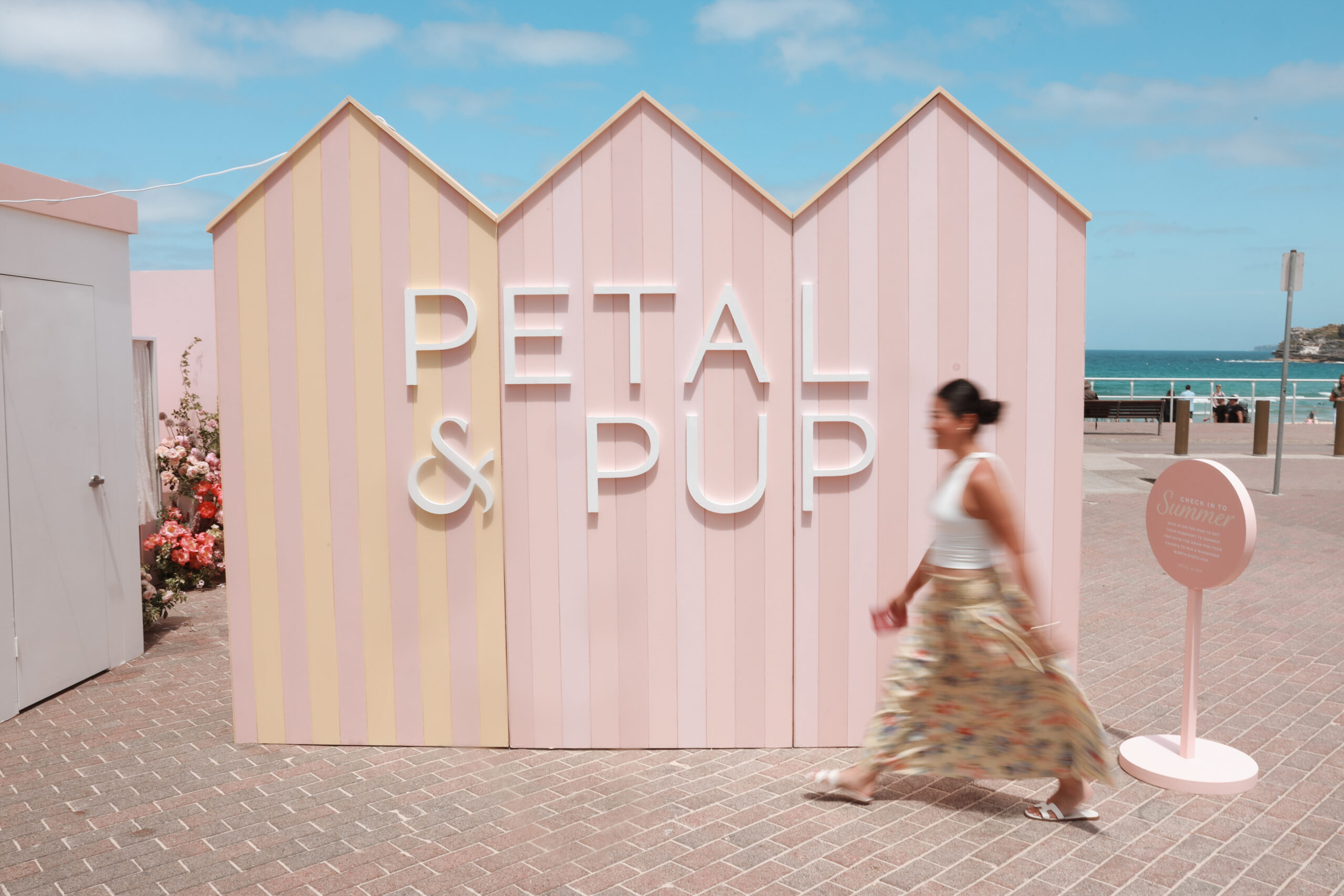
How Petal & Pup let Bondi carry the story
Summer has a way of exposing which brands understand context — and which don’t.
You can see it in the shift happening across fashion right now: a move away from big, attention-grabbing stunts toward moments that feel softer, more situational, and more naturally part of the season.
Petal & Pup’s Bondi activation is a good example of that evolution.
At first glance, it’s simple: a bright, beach-side space introducing the new summer collection.
But what makes it interesting is how comfortably it sits within Bondi’s own rhythm — morning walkers, sun-soaked weekends, the slow drift of people moving through the day.
Petal & Pup’s president Victoria Perry gave her view in a press release:
“As a digital-first brand, we’re always looking for creative ways to connect with our customers beyond the screen. This experience brought the essence of Petal & Pup to life in a fun, interactive setting. It celebrated the start of summer, encouraging self-expression and giving women the confidence to feel their best.”
Building a moment people can drift towards
Curious Nation worked with the brand to bring the experience to life, and the intention was clear from the start: create something that doesn’t fight the environment, but fits it. Not a branded interruption. A moment that feels like it belongs.
Our very own Stephanie Babin, Managing Partner of Curious Nation, shared her vision with Mumbrella: “From the moment the idea took shape, we knew this activation belonged by the ocean. We wanted a setting that captured the feeling of summer holidays, and Bondi is the cultural heartbeat of that season.”
“It brings together a high concentration of our audience, from local beachgoers to international visitors. Bondi also gives a digital-first brand far more contrast and cultural cut-through than a traditional retail environment, it’s a place built for content.”
Instead of a spectacle, the installation leaned into ease — warm textures, soft tones, a layout that felt open rather than over-designed. The kind of scene people move toward instinctively, because it looks like the mood they’re already in.
Atmosphere over mechanics
It’s a reminder that the most effective summer activations aren’t built around mechanics or incentives; they’re built around atmosphere. If people can see themselves in the moment, they’ll share it without needing to be asked. If it feels forced, they won’t.
And that’s the larger trend this activation taps into: shareability as a by-product of resonance, not engineering.
For fashion brands heading into the season, there’s value in paying attention to that. You don’t have to dominate a space like Bondi to be part of it.
Sometimes the strongest play is the lightest touch — something that complements the environment, adds to it gently, and lets people step into the feeling for themselves.
Need help designing a splash-worthy seasonal experience? Get in touch.
Next Insight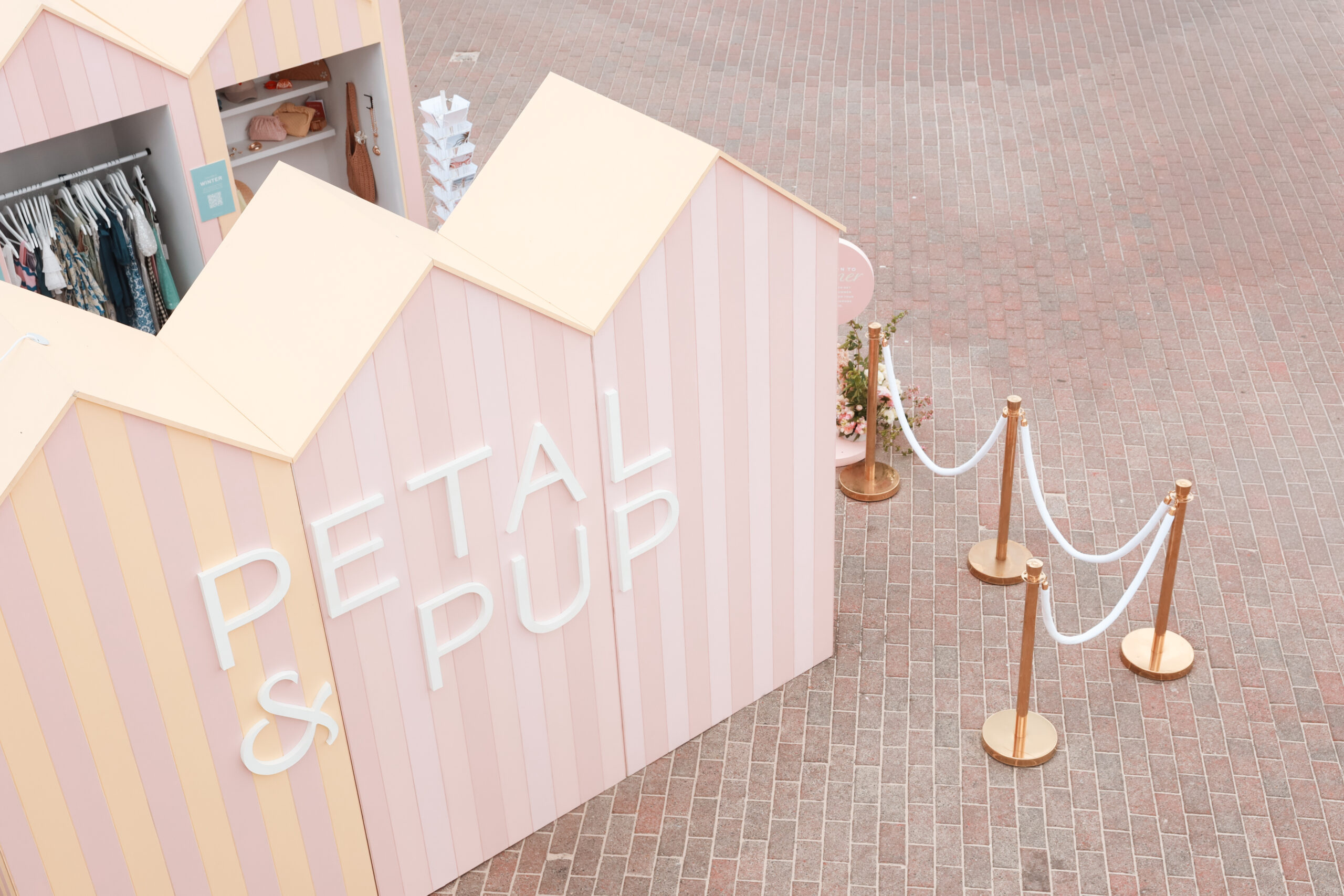
See all our insights
See all our insights
See all our insights
Contact us
Curious? Us too. Get in touch.
Let’s craft your next unforgettable event. Reach out to discover how we can help you make a meaningful impact.
Let's chatWhat is BTL marketing?
Ask ten marketers what BTL marketing means and you’ll probably get ten different answers. Some will say it’s in-store promotions. Others will point to brand activations or sampling. The truth? It’s all of the above – and more.
By Curious Nation, 28/11/25

What is BTL marketing?
Ask ten marketers what BTL marketing means and you’ll probably get ten different answers. Some say it is in-store promotions. Others point to sampling, shopper marketing, or brand activations.
The truth? BTL marketing is all of the above, but with one clear job: to remove friction between awareness, trial and purchase.
Below-the-line marketing (BTL) is the part of the marketing mix designed to influence behaviour in the moments where decisions are made. It is targeted, contextual, and built for measurable outcomes such as trial, conversion, and incremental sales. Unlike broad-reach communications, BTL activities meet people in places where they are already primed to act.
Consumers don’t experience marketing as ATL, BTL, or TTL. They experience whatever is easiest, most relevant, and most distinctive. BTL simply plays the activation role in that system.
Why was it called “below the line”?
The term began as a budgeting distinction, separating mass media spend (above the line) from more targeted promotional spend (below it). While the language is old, the underlying roles still matter today:
- ATL builds mental availability through broad reach.
- BTL drives behaviour, trial, and conversion.
- TTL blends both to create connected brand experiences.
But the real difference is not the line. It is the function. BTL marketing exists to influence behaviour at close range, using relevance, ease, and context as the levers.
What falls under BTL marketing?
BTL marketing covers any activity designed to create targeted, trackable and human-centred interaction.
That includes:
Pop-ups, roadshows, sampling, and brand experiences that create participation, trial and word of mouth.
In-store and shopper marketing
Retail theatre, POS displays, demonstrations, and conversion-led moments at the shelf.
Direct engagement
CRM, email, influencer seeding, field teams and community outreach that drive bottom-funnel action.
Digital and social extensions
Content, creator partnerships, and social engagement that amplify activations and connect physical and digital behaviour.
What ties all of these together is not the channel. It is the goal: reduce effort, increase relevance, and prompt behaviour.
Why brands invest in BTL marketing
Marketers turn to BTL because it works in the moments where decisions happen.
- It is targeted. Built for defined audiences, specific contexts, and high-value environments.
- It is measurable. Designed around conversion, trial, data capture, and real-world outcomes.
- It is immersive. People participate by choice, not interruption.
- It is agile. Easy to test, learn, optimise and repeat at speed.
When powered by a strong brand platform, BTL becomes even more efficient. Fame makes every single trial, tasting or touchpoint work harder
Inside the data: why BTL works, but measurement falls short
Despite its impact, BTL has a measurement problem. Our Activation Effectiveness Barometer revealed that only 2% of marketers feel very confident in measuring ROI from their BTL activity.
Marketers overwhelmingly believe BTL is effective, but the measurement systems often are not. The issue isn’t impact. It is methodology.
Common challenges include:
- KPIs that vary by team, agency or channel
- Over-reliance on short-term proxies
- Little linkage to commercial or sales data
- Weak baselines or no control groups
- Post-event reporting that cannot capture full emotional or behavioural value
The opportunity is enormous. Brands that measure BTL well can prove the value of every activation and scale what works.
Want the full lowdown on activation effectiveness? Download the report here.
The future of BTL marketing
BTL is evolving fast. Retail media has become as creative as traditional advertising. Experiential and social are now inseparable. AI is helping decode emotional response and predict conversion in real time. Shopper data is reshaping how brands target high-value audiences.
But even as technology shifts, the core of BTL stays the same: real people, real places, real behaviour. This is the part of marketing that consumers experience with their senses. The moments that build memory, spark emotion, and unlock trial.
In conclusion: curiosity is the ultimate BTL strategy
When you strip away the acronyms, BTL marketing is curiosity made visible. It starts with understanding what people are trying to do, what stands in their way, and what small intervention could shift behaviour.
BTL is the space between awareness and action, emotion and evidence. When brands show up with relevance, participation and distinctiveness, the effect is immediate.
Want to dive deeper into BTL marketing, and the measurement problem that might be holding it back? Download the report here.
Next Insight
Want to dive deeper into BTL marketing, and the measurement problem that might be holding it back? Download the report here.
Download the report now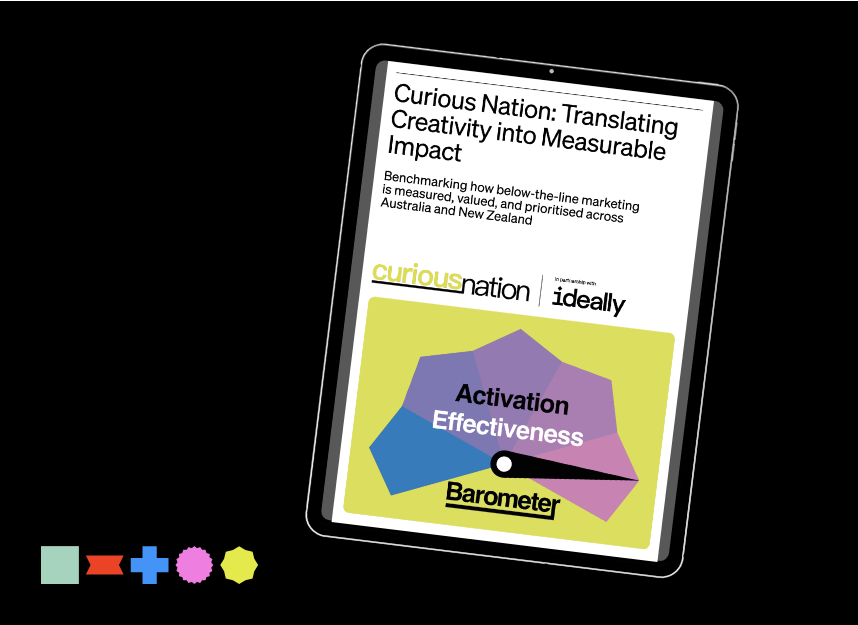
See all our insights
See all our insights
See all our insights
Contact us
Curious? Us too. Get in touch.
Let’s craft your next unforgettable event. Reach out to discover how we can help you make a meaningful impact.
Let's chatHelping the Sydney Morning Herald make “reason” tangible at SXSW Sydney
A shared space. A question asked. 16,000 + individual responses. A single idea made real: reason matters.
By Curious Nation, 27/10/25

In a world swamped by noise, echo chambers and rapid opinion-swings, our partner The Sydney Morning Herald (SMH) wanted to bring their new brand platform — Here’s to Reason — to life in a way that felt authentic, human and experiential.
The question was simple but powerful: how do you take something as abstract as “reason” and make people feel it?
That was the question we explored with The Sydney Morning Herald, when they invited us to help bring their Here’s to Reason platform to life at SXSW Sydney.
The result was The Common Ground: an immersive installation that invited people to pause, reflect, and literally step into the light when they agreed with a statement about life, media, or truth. Over a few days, more than 16,000 people did exactly that.
As Gareth Brock, our Head of Strategy put it: “The Common Ground was designed to help people pause and reconnect with reason. It’s not about who’s right or wrong, it’s about rediscovering dialogue and understanding. Partnering with Nine and Publicis Worldwide to bring this to SXSW was the perfect way to show how brand experiences can make ideas tangible and real.”
For us, it was a perfect expression of what curiosity can do: take a simple idea and turn it into something people can stand inside, interact with, and remember.
In a world that often rewards outrage over understanding, The Common Ground reminded us that curiosity isn’t just about asking questions — it’s about listening for the answers, too.
Next InsightSee all our insights
See all our insights
See all our insights
Contact us
Curious? Us too. Get in touch.
Let’s craft your next unforgettable event. Reach out to discover how we can help you make a meaningful impact.
Let's chatInside the FMCG sector: brand activation strategies that actually work
By Curious Nation, 08/10/25
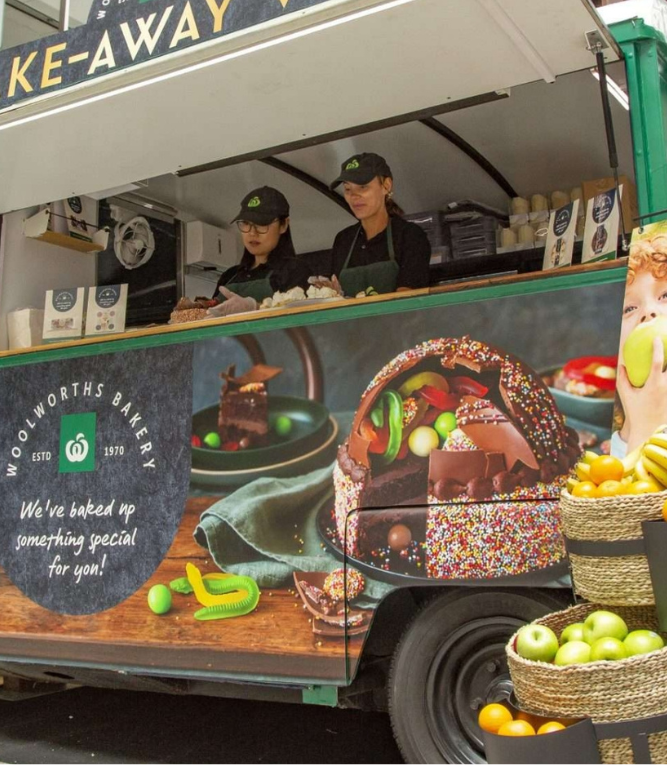
In the high-intensity world of FMCG (Fast-Moving Consumer Goods), brands don’t just compete on shelves – they compete for moments of attention. Every interaction needs to earn its place, build memory, and convert curiosity into choice. That’s where brand activations prove their value: creating tangible, emotional connections that turn casual consumers into loyal advocates.
At Curious Nation, we’ve seen what works (and what doesn’t) across the FMCG sector – from household names to challenger brands looking to steal share. The difference between a good activation and a great one? It’s not budget. It’s curiosity, precision, and relevance.
1. Make the familiar feel fresh
In FMCG, familiarity is both your biggest asset and your greatest risk. The best activations refresh what people already know about your brand, reframing everyday products in ways that reignite emotion and relevance.
Whether that’s a pop-up stall that celebrates a household brand, or packaging brought to life through interactive displays, the goal is simple: make consumers see (and feel) your brand as new again.
2. Create experiences that live beyond the moment
A strong FMCG brand activation doesn’t stop when the stand comes down or the sample runs out. It’s designed to ripple – through content, conversation, and word-of-mouth.
That’s why our activations are built to be shareable by design: giving people something they want to post, not something they’re asked to. When curiosity meets creativity, the impact travels further than any paid impression.
3. Design with data, deliver with heart
In a category driven by distribution and scale, data is your directional compass. Smart FMCG activations use insights from purchase behaviour, location, and audience intent to guide where and how to show up.
At Curious Nation, our Venue Selection Model ensures every roadshow, tasting, or pop-up reaches the right people – maximising trial, relevance, and ROI. But the real power comes from how we humanise those moments: blending insight with emotion to turn interactions into impact.
4. Align brand purpose with real world value
Today’s consumers buy into more than flavour or function. They buy into meaning.
FMCG brands that win don’t just talk sustainability or community – they show it. Activations that demonstrate genuine impact (like circular packaging experiences or community-driven sampling campaigns) do more than drive sales; they drive trust.
5. Measure what matters
The FMCG sector moves fast – but measurement shouldn’t be an afterthought. Beyond footfall or impressions, the most effective activations track sentiment, recall, and purchase intent. We build measurable frameworks around every campaign, so curiosity is commercial as well as creative.
6. Use digital activations thoughtfully
Digital shouldn’t replace physical experience – it should amplify it. The best FMCG brand activations use technology as a bridge between the tangible and the imaginative.
Take our Whitlock’s brand activation: “Tales of Delicious Demise”. An AR portal that transformed condiment packaging into a storytelling gateway, blending physical interaction with digital discovery.
When digital tools are used with intent, to surprise, delight, and extend engagement, they turn everyday products into immersive worlds that people genuinely want to explore.
Turning curiosity into conversion
FMCG brand activations are powerful because they meet consumers where they are – in supermarkets, festivals, forecourts, and high streets – and turn the ordinary into something worth shouting about.
If your brand’s ready to move beyond awareness and into lasting connection, it’s time to get curious. Check out our FMCG page here.
Next Insight
See all our insights
See all our insights
See all our insights
Contact us
Curious? Us too. Get in touch.
Let’s craft your next unforgettable event. Reach out to discover how we can help you make a meaningful impact.
Let's chatHelping Cathay Pacific turn retail spaces into cabin previews for Australian travellers
By Curious Nation, 28/08/25
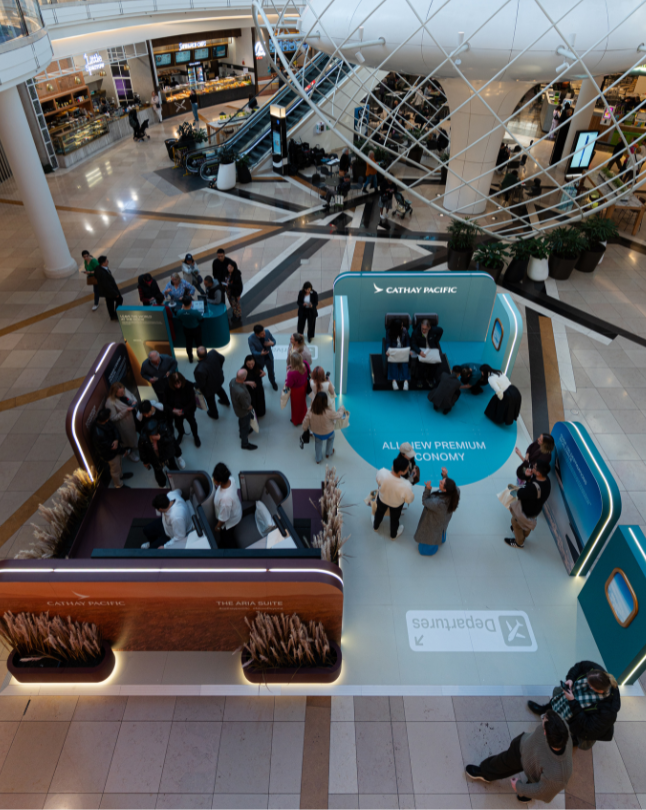
Cathay Pacific showcased its new Aria Suite in Business Class and updated Premium Economy seats in Australia through an interactive activation created by Curious Nation.
The activation, which took place in Sydney and Melbourne, gave travellers a preview of the airline’s premium cabin products now available on its refurbished Boeing 777-300ER aircraft. The aircraft operates daily between Sydney and Hong Kong and has recently been introduced on the Melbourne–Hong Kong route.
Curious Nation designed the activation by transforming retail spaces into a mock flight experience. Visitors checked in at a custom-built airline desk, received printed boarding passes, and were able to test the Aria Suite or Premium Economy seat. The experience included a photo booth, instant giveaways, and the chance to win two return Business Class flights.
The Aria Suite includes sliding privacy doors, 24-inch 4K monitors with Bluetooth audio, and LED lighting. The updated Premium Economy seat was also on display as part of the airline’s ongoing cabin product upgrades.
“We set out to create a ground-level experience that matched the premium quality of Cathay’s new Aria Suite,” Steph Babin, managing partner at Curious Nation, said.
“By recreating a taste of the inflight journey in unexpected places, we’re sparking curiosity, building emotional connection, and allowing people to physically feel the difference. It’s a great example of how experiential can bring brand promises to life in a tangible, memorable way.”
Genevieve Brock, head of marketing, southwest pacific, at Cathay Pacific, added: “Our new Aria Suite represents a significant investment in passenger comfort and design excellence. This activation allows us to showcase the artistry and innovation behind Cathay Pacific’s premium cabins in a way that connects directly with travellers.
“It’s about demonstrating our commitment to thoughtfully crafted experiences that go beyond traditional airline service.”
The activation took place at Chadstone Shopping Centre in Melbourne and Westfield Chatswood in Sydney. Media placements, planned by Spark Foundry, supported the activity, alongside public relations by Soda Communications.
This article originally appeared on Mediaweek.
Next InsightSee all our insights
See all our insights
See all our insights
Contact us
Curious? Us too. Get in touch.
Let’s craft your next unforgettable event. Reach out to discover how we can help you make a meaningful impact.
Let's chat