What is BTL marketing?
Ask ten marketers what BTL marketing means and you’ll probably get ten different answers. Some will say it’s in-store promotions. Others will point to brand activations or sampling. The truth? It’s all of the above – and more.
By Curious Nation, 28/11/25


What is BTL marketing?
Ask ten marketers what BTL marketing means and you’ll probably get ten different answers. Some say it is in-store promotions. Others point to sampling, shopper marketing, or brand activations.
The truth? BTL marketing is all of the above, but with one clear job: to remove friction between awareness, trial and purchase.
Below-the-line marketing (BTL) is the part of the marketing mix designed to influence behaviour in the moments where decisions are made. It is targeted, contextual, and built for measurable outcomes such as trial, conversion, and incremental sales. Unlike broad-reach communications, BTL activities meet people in places where they are already primed to act.
Consumers don’t experience marketing as ATL, BTL, or TTL. They experience whatever is easiest, most relevant, and most distinctive. BTL simply plays the activation role in that system.
Why was it called “below the line”?
The term began as a budgeting distinction, separating mass media spend (above the line) from more targeted promotional spend (below it). While the language is old, the underlying roles still matter today:
- ATL builds mental availability through broad reach.
- BTL drives behaviour, trial, and conversion.
- TTL blends both to create connected brand experiences.
But the real difference is not the line. It is the function. BTL marketing exists to influence behaviour at close range, using relevance, ease, and context as the levers.
What falls under BTL marketing?
BTL marketing covers any activity designed to create targeted, trackable and human-centred interaction.
That includes:
Pop-ups, roadshows, sampling, and brand experiences that create participation, trial and word of mouth.
In-store and shopper marketing
Retail theatre, POS displays, demonstrations, and conversion-led moments at the shelf.
Direct engagement
CRM, email, influencer seeding, field teams and community outreach that drive bottom-funnel action.
Digital and social extensions
Content, creator partnerships, and social engagement that amplify activations and connect physical and digital behaviour.
What ties all of these together is not the channel. It is the goal: reduce effort, increase relevance, and prompt behaviour.
Why brands invest in BTL marketing
Marketers turn to BTL because it works in the moments where decisions happen.
- It is targeted. Built for defined audiences, specific contexts, and high-value environments.
- It is measurable. Designed around conversion, trial, data capture, and real-world outcomes.
- It is immersive. People participate by choice, not interruption.
- It is agile. Easy to test, learn, optimise and repeat at speed.
When powered by a strong brand platform, BTL becomes even more efficient. Fame makes every single trial, tasting or touchpoint work harder
Inside the data: why BTL works, but measurement falls short
Despite its impact, BTL has a measurement problem. Our Activation Effectiveness Barometer revealed that only 2% of marketers feel very confident in measuring ROI from their BTL activity.
Marketers overwhelmingly believe BTL is effective, but the measurement systems often are not. The issue isn’t impact. It is methodology.
Common challenges include:
- KPIs that vary by team, agency or channel
- Over-reliance on short-term proxies
- Little linkage to commercial or sales data
- Weak baselines or no control groups
- Post-event reporting that cannot capture full emotional or behavioural value
The opportunity is enormous. Brands that measure BTL well can prove the value of every activation and scale what works.
Want the full lowdown on activation effectiveness? Download the report here.
The future of BTL marketing
BTL is evolving fast. Retail media has become as creative as traditional advertising. Experiential and social are now inseparable. AI is helping decode emotional response and predict conversion in real time. Shopper data is reshaping how brands target high-value audiences.
But even as technology shifts, the core of BTL stays the same: real people, real places, real behaviour. This is the part of marketing that consumers experience with their senses. The moments that build memory, spark emotion, and unlock trial.
In conclusion: curiosity is the ultimate BTL strategy
When you strip away the acronyms, BTL marketing is curiosity made visible. It starts with understanding what people are trying to do, what stands in their way, and what small intervention could shift behaviour.
BTL is the space between awareness and action, emotion and evidence. When brands show up with relevance, participation and distinctiveness, the effect is immediate.
Want to dive deeper into BTL marketing, and the measurement problem that might be holding it back? Download the report here.
Next Insight
Want to dive deeper into BTL marketing, and the measurement problem that might be holding it back? Download the report here.
Download the report now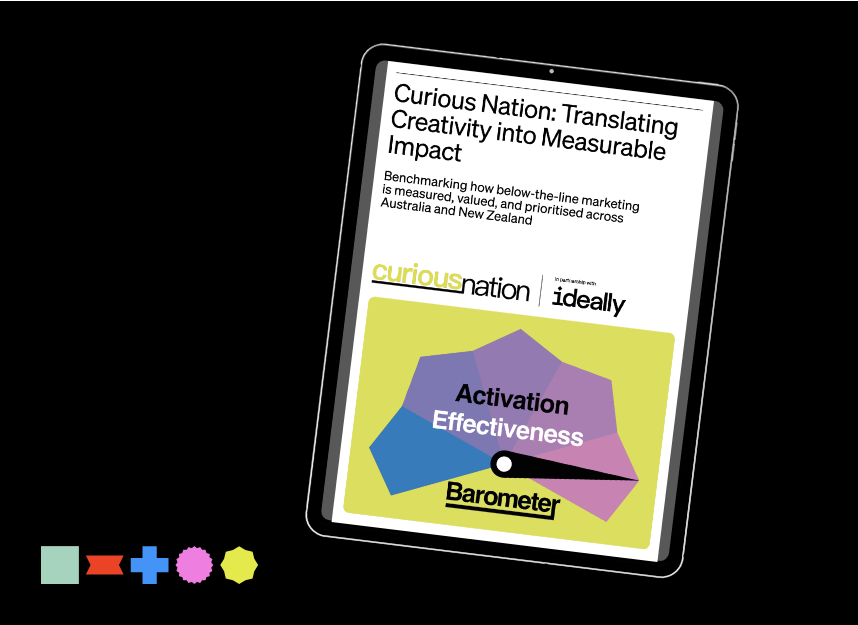


See all our insights
See all our insights
See all our insights
Contact us
Curious? Us too. Get in touch.
Let’s craft your next unforgettable event. Reach out to discover how we can help you make a meaningful impact.
Let's chat